Please rotate your device
to portrait for the best experience
The Living Bible Gallery

The Bible Gallery

Gustave Doré · Talbot W. Chambers, D.D. · Cassell, 1880

"For the LORD is a great God, and a great King above all gods." — Psalm 95:3

The Bible Gallery

One Hundred Superb Illustrations by Gustave Doré
with Descriptive Letter-press

Illustrated by Gustave Doré

Descriptions by Talbot W. Chambers, D.D.

Cassell, Petter, Galpin & Company · London, Paris and New York · 1880

Public Domain — Getty Research Institute digitization

98 Plates Gustave Doré · 1832–1883 Old & New Testament Public Domain
✦  About This Work  ✦

The Artist, The Scholar & The Book

Two men who almost certainly never met — a French Romantic visionary and an American Presbyterian divine — together produced one of the most influential illustrated Bibles of the nineteenth century. This is their story.

1832 – 1883
Gustave Doré
Artist & Engraver · Strasbourg & Paris
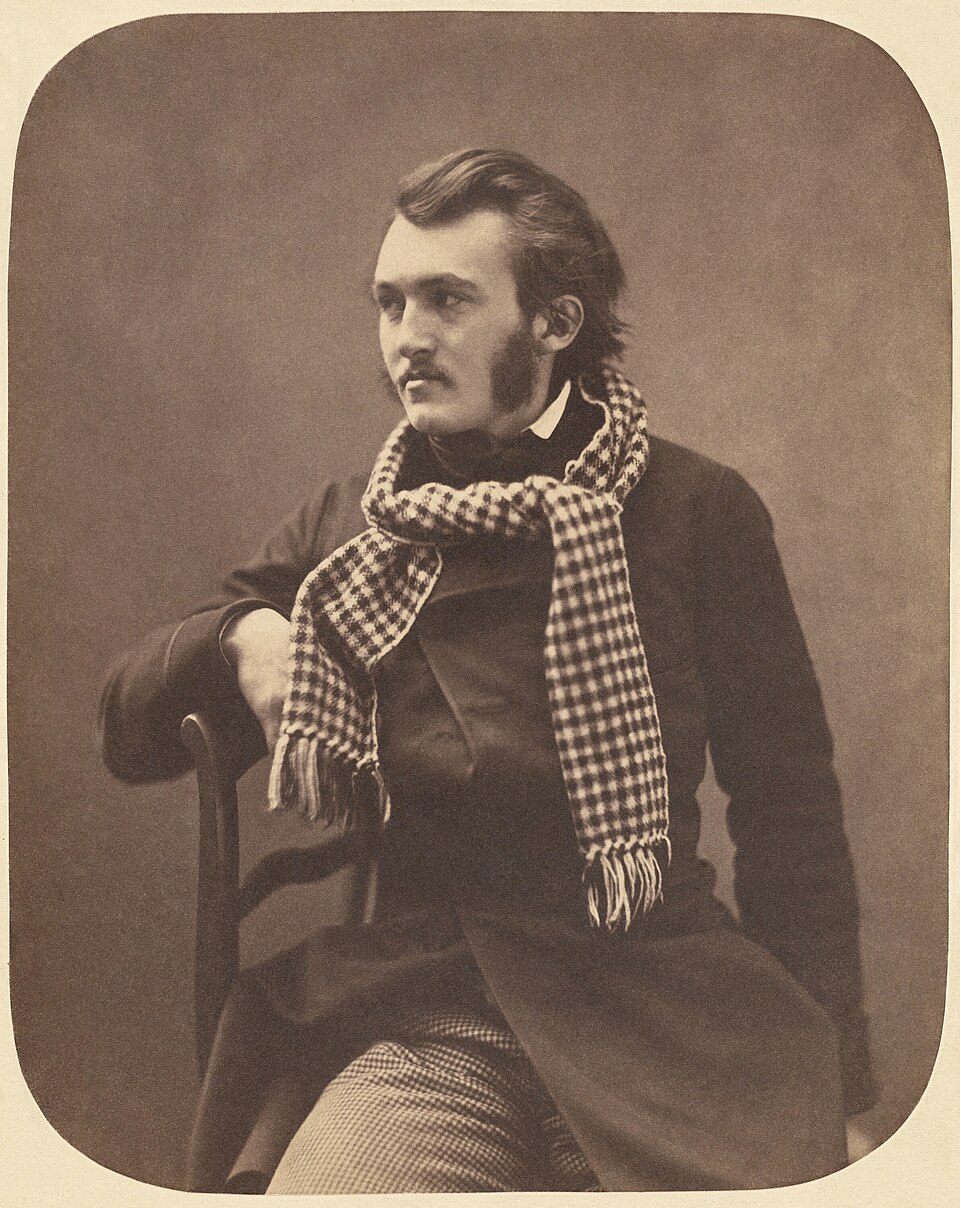
Gustave Doré, c. 1860
Gustave Doré · Paris, c. 1860

Paul Gustave Doré was born on 6 January 1832 in Strasbourg, France, and from childhood displayed a prodigious talent that astonished all who encountered it. Largely self-taught and working at extraordinary speed, he was publishing caricatures in Paris by the age of fifteen. Over the course of his career he produced illustrations for more than 120 books, creating upwards of ten thousand individual compositions across the whole of world literature — Dante's Inferno, Cervantes, Milton, Tennyson, and the Bible among them.

The biblical project occupied him for roughly four years, approximately 1862 to 1866, and he worked entirely in his Paris studio. Unlike earlier biblical artists such as David Roberts, Doré explicitly refused suggestions that he travel to Palestine or Egypt for on-site sketches, preferring instead to reconstruct ancient settings through a blend of deep library research and sovereign imagination.

"Of all I have ever done, nothing has ever affected me so deeply as have my religious works… It did my soul good to labour at them."

— Gustave Doré, recorded by Blanche Roosevelt, 1885

Doré died on 23 January 1883 in Paris, at fifty years of age. His biblical illustrations remain the most widely reproduced religious engravings in history, still shaping how millions of people visualize the stories of Scripture.

1819 – 1896
Talbot Wilson Chambers
Minister, Scholar & Author · New York City
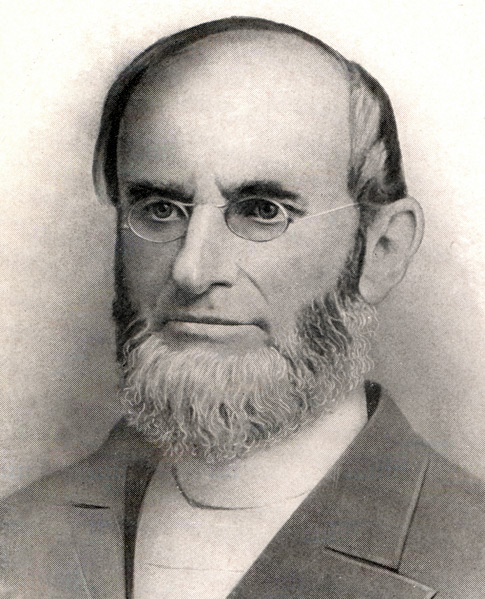
Rev. Talbot W. Chambers, c. 1870
Rev. Talbot W. Chambers · New York, c. 1870

The Reverend Talbot Wilson Chambers, D.D., LL.D., was born on 25 February 1819 in Middletown, New Jersey, and educated at New York University and New Brunswick Theological Seminary. He was ordained in the Dutch Reformed Church and served as pastor of the Collegiate Church on Forty-eighth Street in Manhattan for more than forty years — one of the longest and most distinguished pastorates in nineteenth-century New York.

Chambers was a formidable scholar, a prolific author, and a churchman of wide influence. He published commentaries on Psalms and Daniel, a major study of prayer, and numerous devotional and apologetic works. He was known among his contemporaries for the clarity and accessibility of his prose — a scholar who could write for the educated general reader without condescension.

"Scripture is not a book to be admired but a word to be obeyed, not a monument but a living voice."

— Talbot W. Chambers, Thoughts on Prayer, 1854

Chambers died on 2 April 1896 in New York City, having published scholarly and devotional works for more than fifty years. His Bible Gallery essays remain among the finest short expositions of the Doré plates ever written.

Publication History

How This Book Came to Be

1862–1866
Doré creates 241 illustrations for the Bible, published by Cassell in London. The Bible becomes one of the best-selling illustrated books of the century.
1866–1880
Cassell licenses the plates for multiple editions across Europe and North America. Doré's biblical imagery enters the visual vocabulary of the Western world.
1880
Cassell commissions Chambers to select approximately 100 plates and write descriptive essays. The Bible Gallery is published in London, Paris, and New York.
1883
Gustave Doré dies in Paris, aged 50. His biblical work is already a defining visual legacy.
1896
Talbot W. Chambers dies in New York City, having published scholarly and devotional works for more than fifty years.
2026
BibleCosmos digital edition: plates restored, AI-enhanced, and reunited with Chambers' original letter-press in this interactive reader.

By 1880, Cassell recognized an opportunity to produce a refined, scholarly companion volume drawing on their existing plate rights. They engaged Chambers — then at the height of his reputation as a biblical expositor — to select approximately 100 of the finest plates and provide descriptive essays linking each image to its scriptural source.

The result was The Bible Gallery, issued by Cassell, Petter, Galpin & Company from their London, Paris, and New York offices in 1880. It was a large-format quarto volume, handsomely produced, and intended as both an art book and a devotional companion for Protestant families. It sold well and was reprinted multiple times through the 1880s and 1890s.

A note on the collaboration: While Cassell held the rights to Doré's plates, there is no evidence that the two men ever met or corresponded, or that Doré personally reviewed Chambers' selection and commentary. The Bible Gallery was a publisher-driven repackaging of existing material — Doré's artistry and Chambers' scholarship brought together by Cassell's commercial vision rather than by any direct artistic partnership.